Years ago, a resident said something to me that I have never forgotten—a comment that continues to shape how I think about social connection in nursing homes:
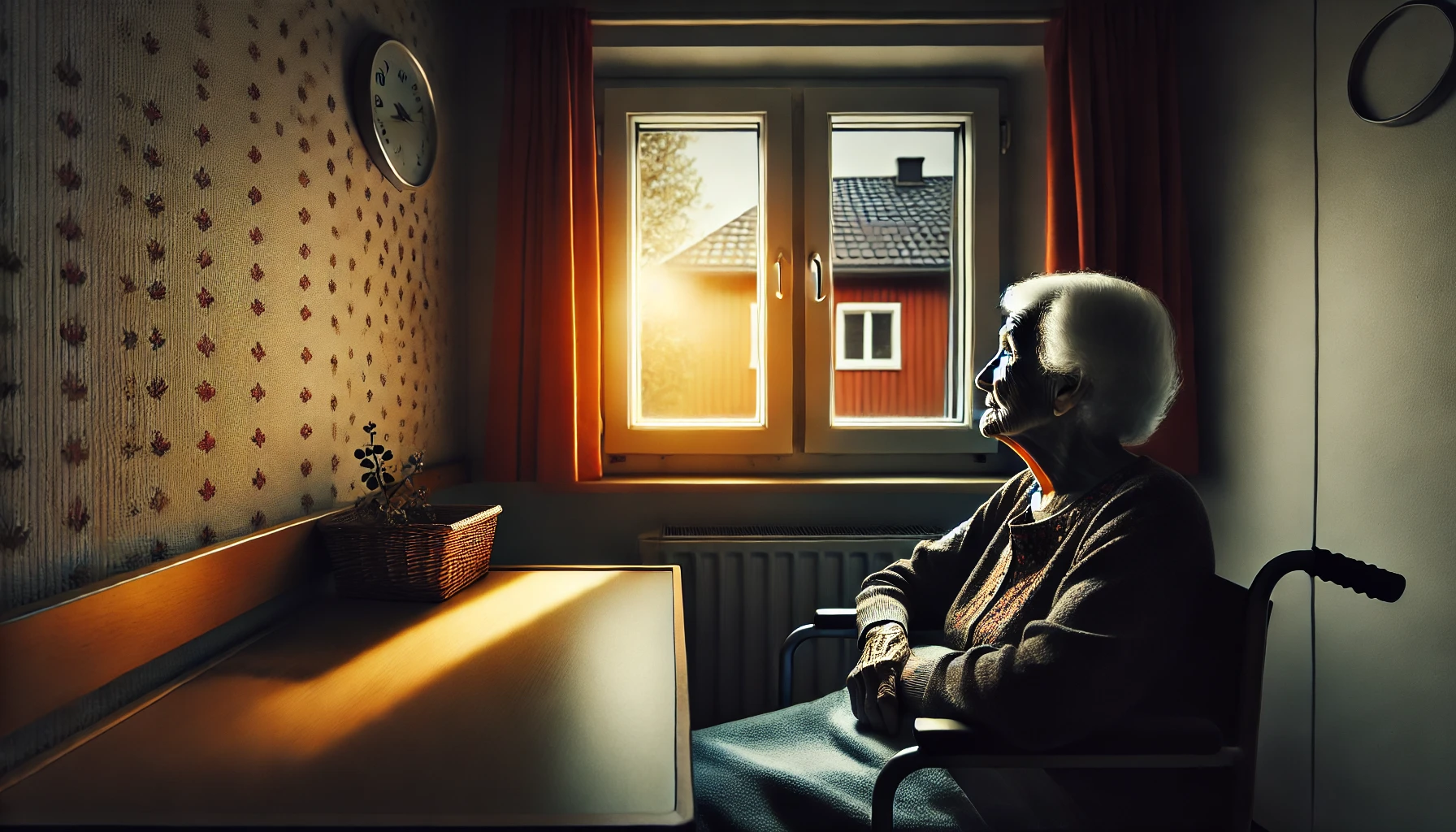
“I have a lot of people around me—nurses, aides—but there is no one here just for me.”
She was surrounded by people. She was receiving care. She was not describing an empty building or an absence of staff.
She was describing something else entirely.
She wanted a relationship with someone who came specifically to see her.
That distinction has stayed with me because it gets at something we often miss when we talk about quality in long-term care.
A person can have social contact without feeling socially connected. They can participate in activities while lacking the support they desire. They can be surrounded by people and still experience loneliness.
That raises an important question:
Should social connection be part of how we define quality in a nursing home?
What the Five Stars Tell Us
When families search for a nursing home, many turn to Medicare’s Care Compare website and its familiar Five-Star Quality Rating System.
Those stars matter.
CMS rates nursing homes based on health inspections, staffing, and quality measures addressing issues such as falls, pressure injuries, functional decline, anti-psychotic medication use, hospitalizations, and emergency department visits.
All of those things matter.
But so do loneliness, belonging, and having someone walk through the door because that person came specifically to see you.
And here is something important:
CMS already recognizes that connection matters.
Social Connection in Nursing Homes: CMS Already Asks About Loneliness
People living in Medicare- and Medicaid-certified nursing homes are assessed using the Minimum Data Set, commonly called the MDS.
Among the questions is D0700: Social Isolation.
Residents are asked how often they feel lonely or isolated from those around them.
CMS therefore considers loneliness important enough to include in a standardized national resident assessment.
Federal nursing-home regulations also protect residents’ rights to interact with members of the community and participate in community activities both inside and outside the facility. CMS guidance discusses connectedness, belonging, identity, joy, meaning, and maintaining contact with the community.
Yet social connection is not reflected in the Five-Star Quality Rating System.
CMS recognizes connectedness. CMS asks residents whether they feel lonely or isolated. But connection is not visible in the stars.
Perhaps it should be.
Community Means More Than the Nursing Home
When we talk about community engagement, we should not mean only the community that exists inside a nursing home.
We should also mean the larger community outside its walls:
The neighborhood. Faith communities. Veterans organizations. Civic groups. Former workplaces. Libraries. Schools. Friends. Neighbors.
The ordinary network of relationships and associations that helped define a person’s life before their address changed.
Moving into a nursing home should not quietly end someone’s membership in that larger community.
A nursing home is a place where someone lives. It should never become the boundary of that person’s community.
Yet a person’s social world can shrink dramatically after entering long-term care.
Friends may stop visiting. Former coworkers lose touch. Transportation becomes difficult. Faith communities may not know how to remain involved. Organizations that were once an important part of someone’s life may simply stop calling.
Nursing homes can work hard to prevent that.
But they cannot do it alone.
Being Busy Is Not the Same as Being Connected
Social connection is also not the same thing as participation in activities.
A resident could attend exercise class in the morning, bingo in the afternoon, and a musical program after dinner—and still go to bed feeling lonely.
That does not mean those activities have failed.
Activities can provide pleasure, stimulation, friendship, purpose, and meaning. Activity and life enrichment professionals do extraordinarily important work every day.
But a person can interact with many people without feeling that they truly belong. They can participate in programs without having the relationship they most want.
Which brings us back to that resident:
“I have a lot of people around me—nurses, aides—but there is no one here just for me.”
Sometimes what someone needs is not another activity.
Sometimes they need someone who knows their story. Someone who remembers what they talked about last week. Someone who notices when they seem unusually quiet. Someone who comes specifically to spend time with them.
That kind of relationship cannot be captured by activity attendance alone.
This Is a Community Responsibility
The presence of loneliness in a nursing home does not mean activity professionals, life enrichment directors, therapeutic recreation professionals, or other staff are failing.
Many are doing remarkable work, often with limited resources.
But no activity department can recreate the entire network of relationships a person may lose when entering long-term care.
An activity director cannot become everyone’s old neighbor, former coworker, church friend, fellow veteran, fishing partner, or the friend who stops by simply because it is Tuesday.
Nor should we expect them to.
Loneliness in long-term care is not an activity-department problem. It is a community problem, and solving it requires the community to show up.
Faith communities can remain connected with members who move into nursing homes.
Civic organizations can continue including longtime members.
Schools and universities can build sustained intergenerational relationships.
Libraries, arts organizations, veterans groups, neighborhood associations, businesses, and volunteer organizations can create genuine partnerships.
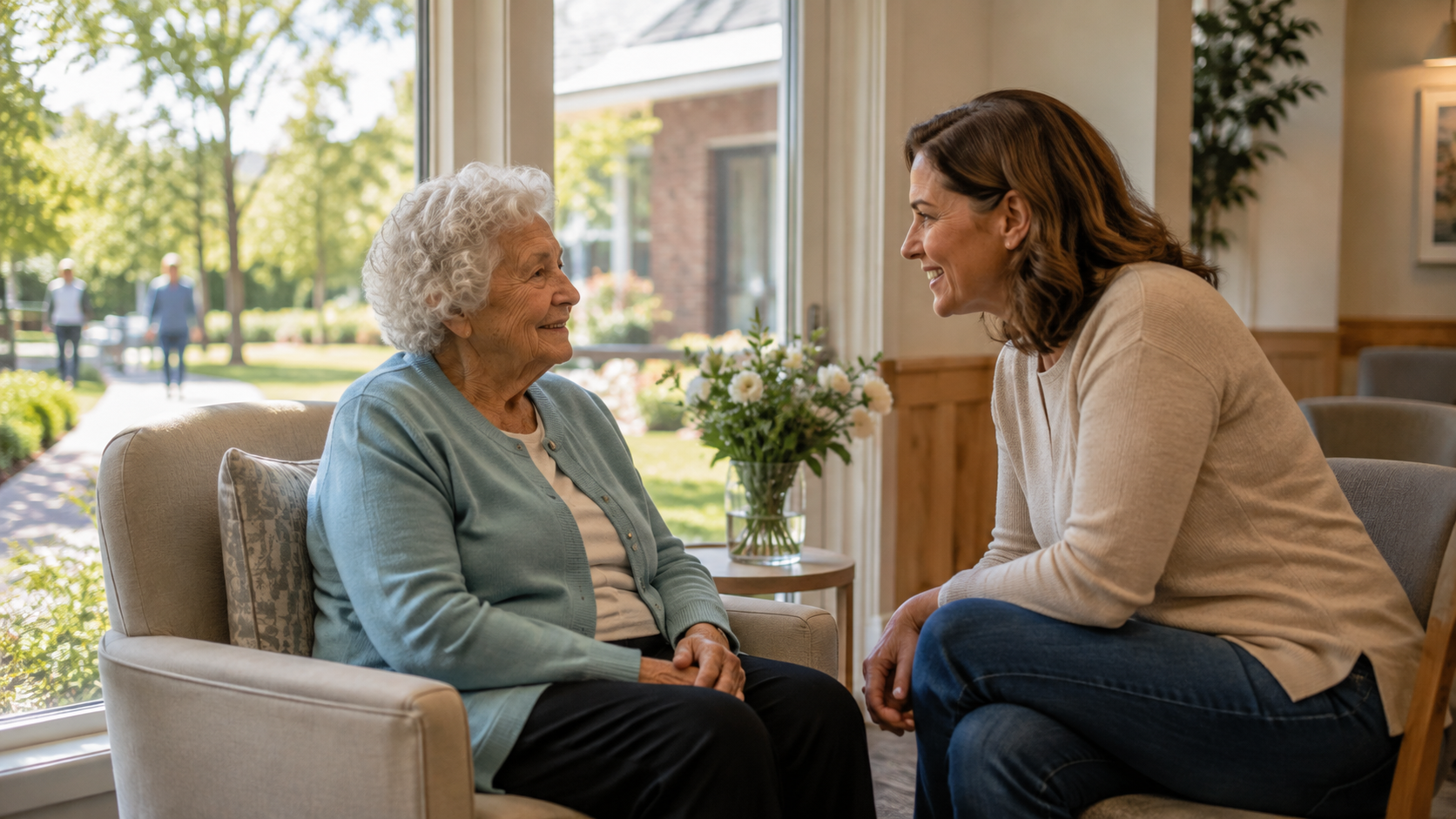
And trained companion volunteers can develop consistent one-to-one relationships with residents who want them.
The volunteer does not replace family, staff, or the activity professional.
The volunteer offers something different:
“I came because I wanted to see you.”
The Sixth Star: Connection
I am not suggesting that CMS simply change its Five-Star system to six stars.
The Sixth Star is a policy idea.
It asks whether social connection and meaningful involvement with the larger community should become more visible in how we define nursing-home quality.
What if we asked whether residents have the amount and type of social connection they want?
Whether they have at least one meaningful relationship they can rely on?
Whether relationships with friends, faith communities, clubs, neighborhoods, and organizations outside the nursing home are maintained when desired?
Whether residents who prefer one-to-one relationships have opportunities for them?
Whether they feel known, valued, and that they belong?
Any measure would need to respect individual preferences. Some people thrive in groups. Others prefer one or two close relationships. Some enjoy being busy. Others value solitude.
The goal should never be to make everyone socially busy.
The resident’s experience has to matter.
One More Question
The Five-Star Quality Rating System gives families valuable information. Nothing about this idea diminishes the importance of those measures.
It asks us to expand our understanding of what quality means.
We measure falls because falls matter.
We measure pressure injuries because pressure injuries matter.
We measure staffing because staffing matters.
We measure hospitalizations because hospitalizations matter.
If connection matters, perhaps we should find a way to measure that too.
Moving into long-term care should never require surrendering one’s place in society.
Sometimes a person does not need another program.
Sometimes they simply need to know that someone came specifically to see them.
And after the inspections are finished, the staffing ratios calculated, the quality measures scored, and the five stars assigned, perhaps there is one more question we should ask:
Is someone coming to see me?
Help the community show up.
If you are a long-term care professional, community organization, or someone interested in becoming a companion volunteer, we’d like to hear from you. Together, we can help ensure that people living in long-term care remain connected to the communities around them.
Learn More About NALTCV Become a Companion Volunteer
This article is adapted from the policy paper “The Sixth Star: Why Connection Should Count in Nursing Home Quality.” The full paper includes the research, federal regulations, measurement literature, and references supporting this proposal.